Bred to Entertain report
Read our 2026 assessment capturing 15 years of Thailand’s elephant tourism industry to find out more.
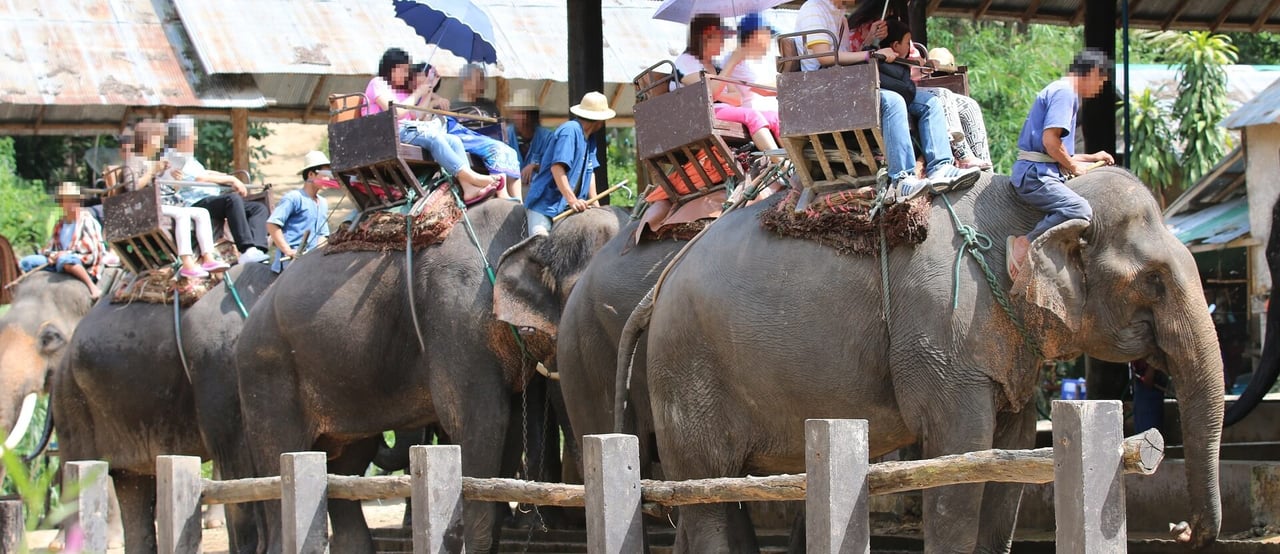
Thousands of elephants around the world are suffering in the name of tourism. But it doesn’t have to be this way. You have the power to change the world for elephants!
The best place to see elephants is in the wild. But if you’re going to visit an elephant venue, make sure it allows elephants to be elephants, while educating visitors on their complex ne
The best place to see elephants is in the wild. But if you’re going to visit an elephant venue, make sure it allows elephants to be elephants, while educating visitors on their complex needs.
Elephant friendly venues don't use elephants for entertainment, or allow any direct human-elephant contact.
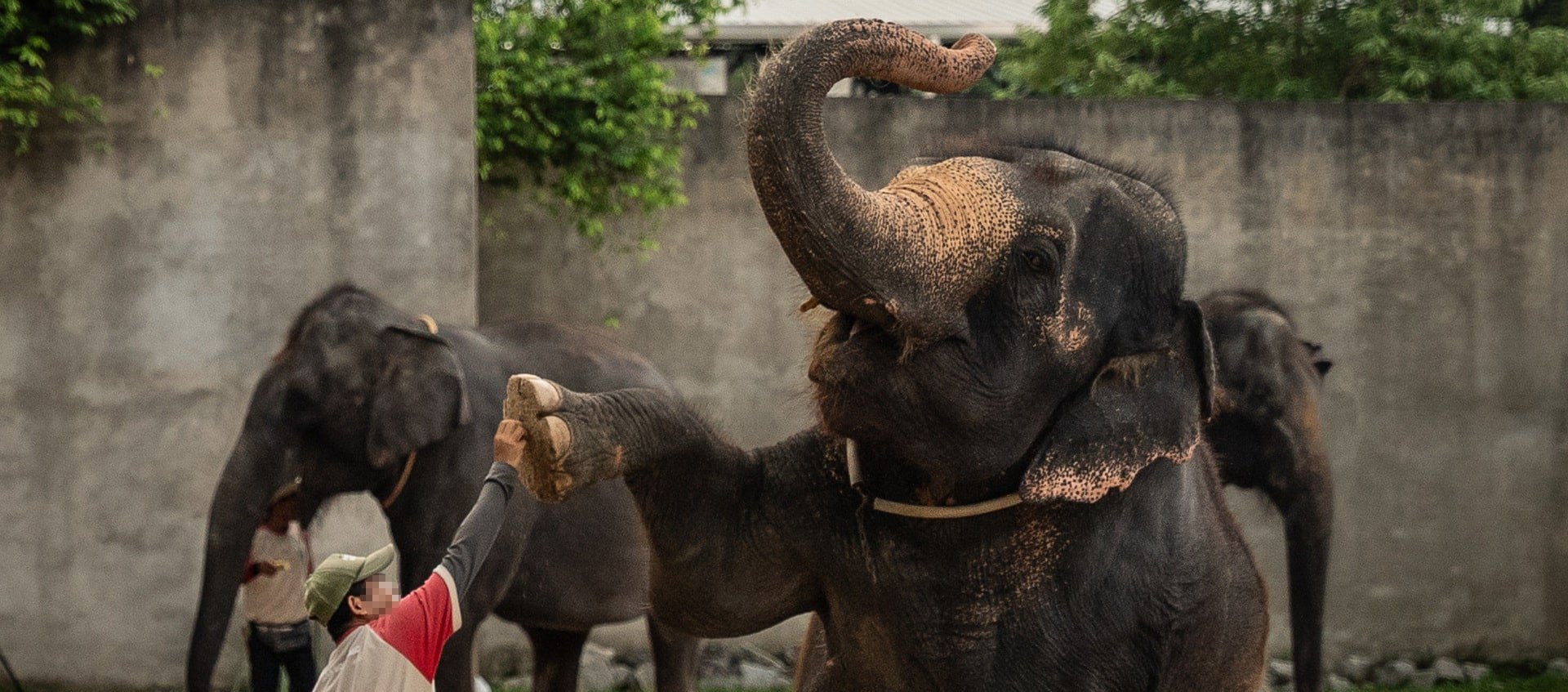
If you want to see elephants on your next holiday, keep these elephant friendly travel tips in mind:
Our Bred to Entertain report (2026) offers insights into the scale, practices, and welfare conditions of elephants being used in tourist attractions in Thailand. We conducted field research and visited elephant venues around the country to see for ourselves exactly how elephants are being treated and how venues are run.
Take a look at our key findings or download the full report below to read more.
Right now, thousands of elephants are suffering in Thailand in the name of tourism. We surveyed 236 elephant venues, holding a total of 2,849 elephants, and found that:
Read our 2026 assessment capturing 15 years of Thailand’s elephant tourism industry to find out more.
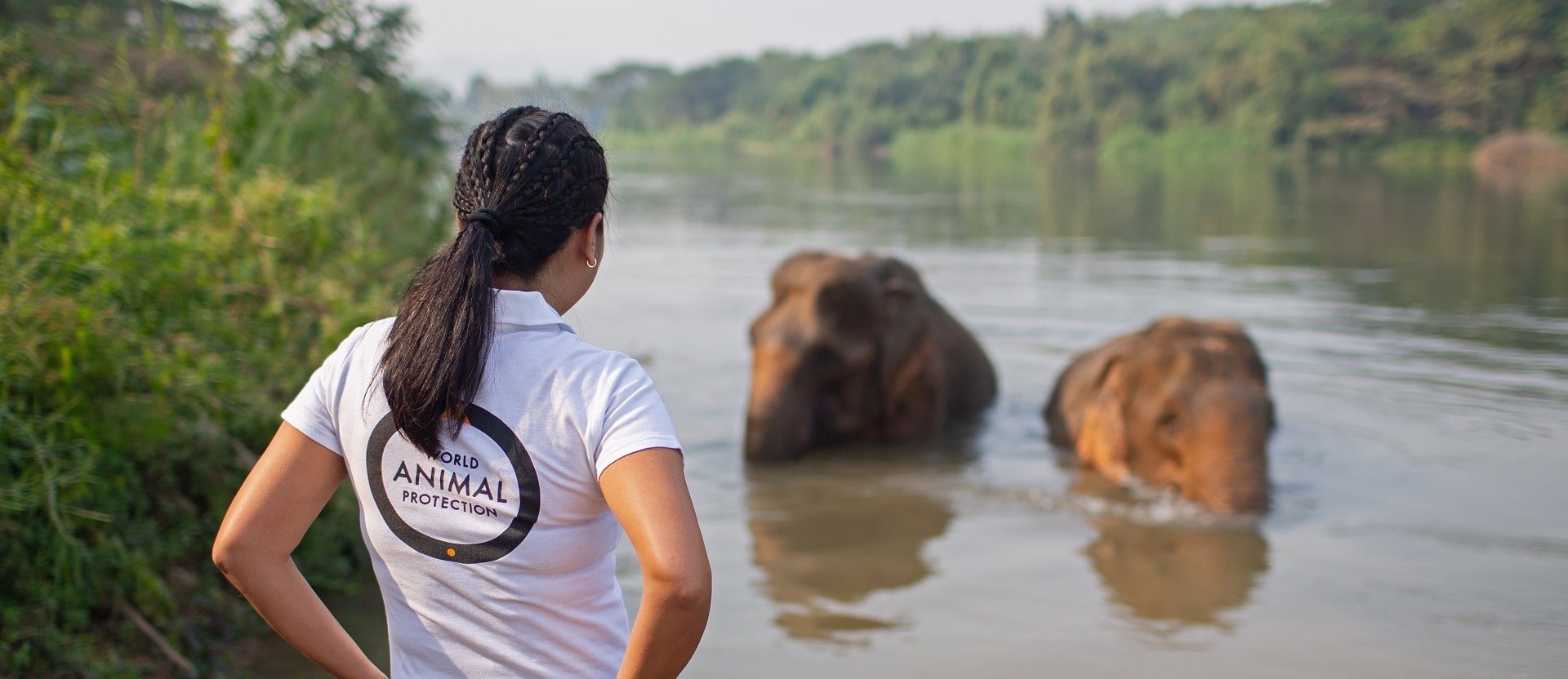
World Animal Protection’s elephant-friendly guidelines support venues to move away from direct contact and towards observation-led experiences that protect elephant autonomy and reduce the demand for captivity.
The venues below received the highest scores in our most recent assessment and are categorised according to their practices. They are either classed as following our Elephant Friendly guidelines or Elephant Friendly with the exception of offering hand feeding over a barrier.
For a comprehensive list of venues and their offerings, check out the full list in the report.
These venues have been reviewed and updated in December 2025, ensuring that all the information about their practices is up to date.
Key:
✅ Elephant Friendly guidelines*
🟡 Do offer hand-feeding over barrier
* World Animal Protections’ elephant-friendly guidelines help transition venues to incorporate best-practice animal management and avoid further increasing the captive elephant population. Such venues will allow elephants more autonomy, more opportunities to engage in natural behaviours, and will avoid direct contact with visitors.
Elephant Valley Project, Cambodia ✅
Tiger Tops Tharu lodge, Nepal ✅
Boon Lott's Elephant Sanctuary, Sukothai ✅
Burm and Emily's Elephant Sanctuary, Chiang Mai ✅
ChangChill View Doi, Chiang Mai ✅
ChangChill Hillside, Chiang Mai ✅
Elephant Forest Phitsanulok, Phitsanulok ✅
Following Giants Koh Lanta, Koh Lanta✅
Following Giants Krabi, Krabi ✅
Global Vision International, Chiang Mai ✅
Kindred Spirit Elephant Sanctuary, Chiang Mai ✅
Mahouts Elephant Foundation - LIFE Project, Chiang Mai ✅
Mahouts Elephant Foundation - Palatha Project, Umphang ✅
Phuket Elephant Sanctuary, Phuket ✅ (Venue announced phasing out hand feeding by April 2026.)
Somboon Legacy Foundation, Kanchanaburi ✅
(Conversations on elephant-friendly practices have not yet occurred.)
Wildlife SOS - Elephant Conservation and Care Centre, India
Laos Elephant Conservation Centre, Laos
Mandalao, Laos 🟡
Association Moey, Nepal 🟡
Elephant Hills, Khao Sok 🟡
Golden Triangle Asian Elephant Foundation, Chiang Rai 🟡
Hidden Forest Elephant Reserve, Phuket 🟡
Isara Elephant Foundation, Chiang Mai
Khao Sok Elephant Sanctuary, Khao Sok 🟡
Phuket Elephant Nature Reserve, Phuket
Samui Elephant Sanctuary, Koh Samui 🟡
Wildlife Friends Foundation Thailand, Phetchaburi 🟡
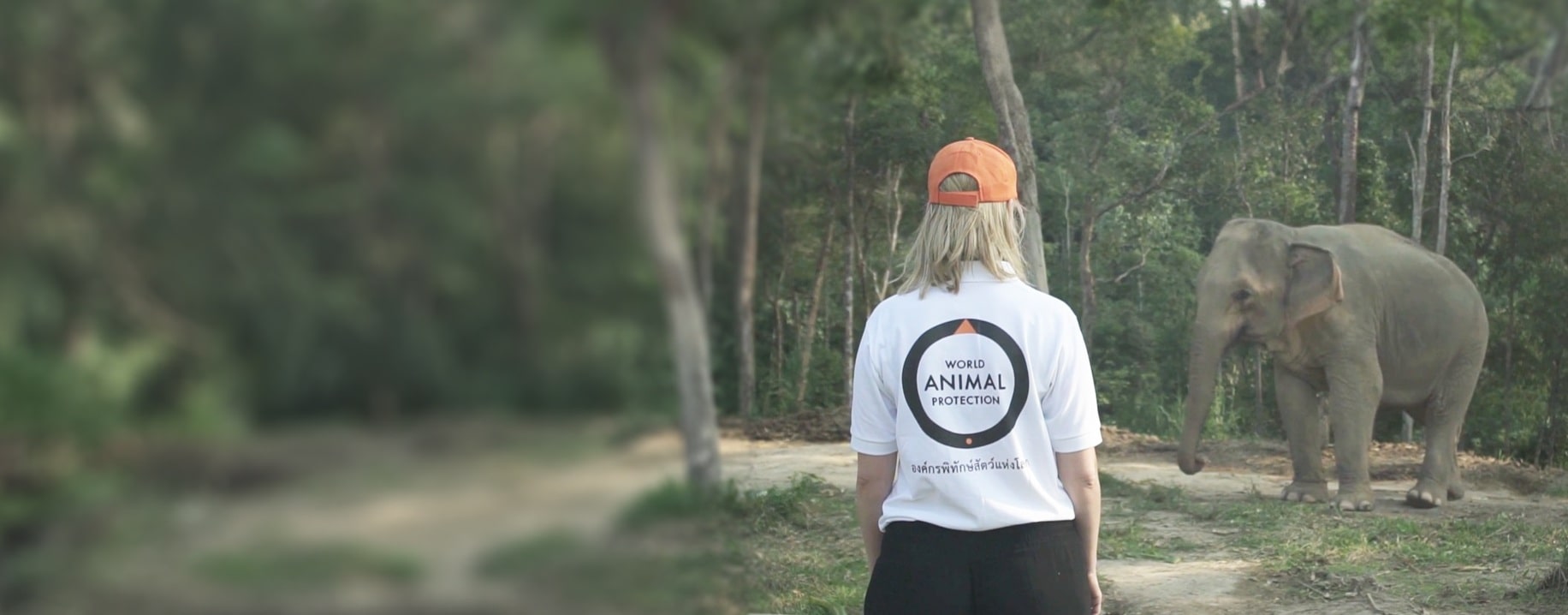
A venue where elephants are free to behave like elephants.
Here are four key questions you can ask to find out if the elephant sanctuary you want to visit is genuine or not:
If an elephant venue allows you to get close enough to ride, bathe, or touch the animal, it’s because they’ve been cruelly trained. A genuine elephant sanctuary is one where you can look, not touch.
A venue may call itself a sanctuary, rescue centre or retirement home for elephants, but don’t assume this means high welfare. It is important to do your research before booking and use our guide above to avoid being misled.
If the elephants in a venue are not allowed to freely move and express natural behaviours, it’s not an elephant-friendly venue.
Elephants in the wild spend their days roaming long distances, grazing and socialising with other elephants, not confined in small enclosures for most of the day, or forced to perform.
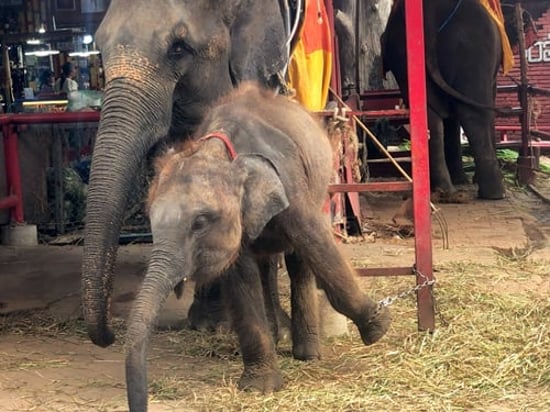
They might be cute, but if you can see or touch a baby elephant, especially without their mum, then the venue is not elephant-friendly.
Baby elephants are tourist magnets, but true elephant-friendly venues shouldn’t allow breeding. You shouldn’t be seeing young elephants, except for orphanages where babies are rescued from the wild.
Elephants should always be treated with kindness and respect.
Being wild animals, captive elephants can be unpredictable and dangerous, especially if they're being crowded. Many tourists and mahouts are injured and killed each year. Even in elephant-friendly venues, you’ll often see mahouts accompanying elephants at a distance to keep everyone safe.
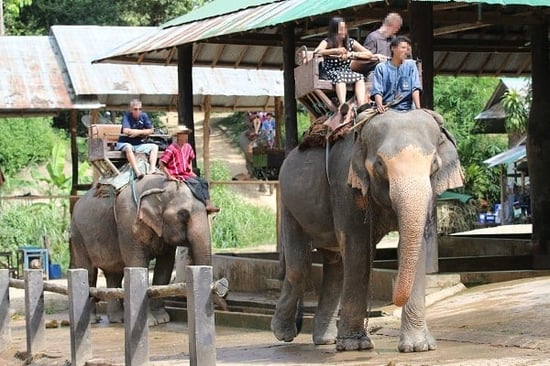
Pledge to stop the abuse suffered by elephants used for entertainment.
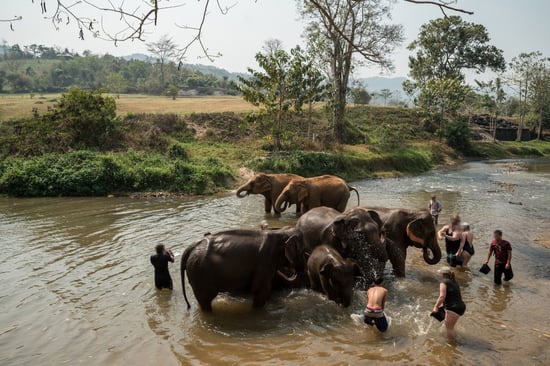
Find out more about why elephant bathing is just as cruel as riding.
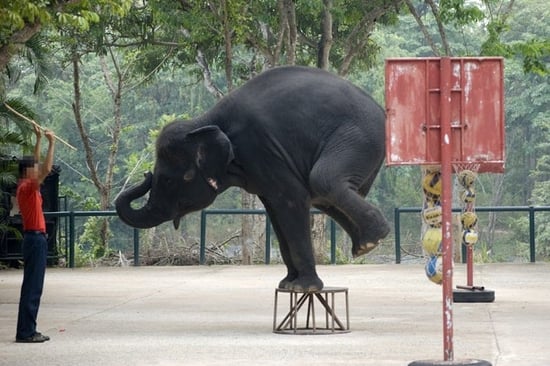
Will you donate to protect elephants from the clutches of tourism?
Join thousands of animal lovers fighting to protect wildlife and give farmed animals good lives. Sign up now to receive emails with all the ways you can help.
Sign up