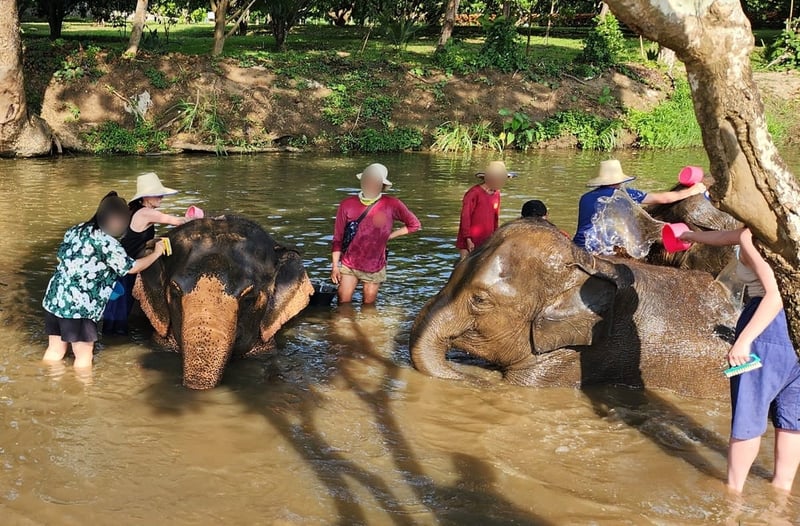
Planning to wash elephants in Thailand? New report shows why you should give it a miss
News
Latest report warns tourists in Thailand of the hidden animal suffering behind elephant washing and other activities that are often marketed as “ethical”.
Tourists heading to Thailand are being urged rethink booking elephant washing or “care-taking” experiences, as our 2026 ‘Bred to Entertain’ report reveals these experiences still cause serious harm to the animals.
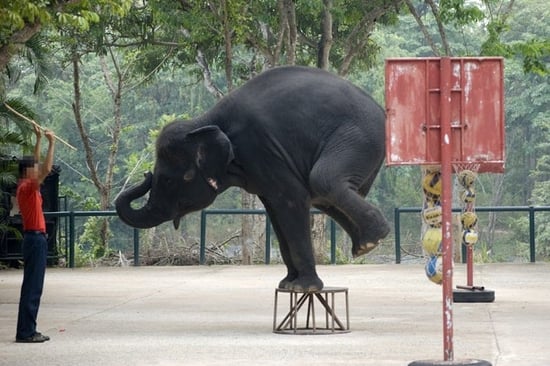
Researchers found that two in three elephants used in tourism across Thailand continue to live in poor conditions. While many travellers have stopped supporting elephant rides and circus-style shows, the industry has shifted to offer what look like ethical alternatives.
Part of the problem is a major awareness gap. Most people are unaware of the brutal training process many elephants undergo in the tourism industry.

Tourists are increasingly avoiding elephant rides because they understand the harm inflicted on the animals. Unfortunately, misleading marketing is drawing them to activities like washing that also require punishment-based training, regular restraint and unnatural visitor interactions.
Many elephant camps market themselves as sanctuaries or “high-welfare” destinations, but this is far from the reality. Genuine sanctuaries would never offer elephant riding or washing experiences.
We are urging travel companies to implement strong policies to protect wild animals and to stop promoting or selling tickets to hands-on wildlife encounters.
The report is based on 15 years of research, making it the most detailed investigation of Thailand’s captive elephant tourism industry. Researchers monitored the living conditions of 2,849 elephants across 236 tourism venues across the country.
Key findings from the report paint a heartbreaking picture of captive elephants in Thailand:
- 69% are kept in poor or unacceptable conditions.
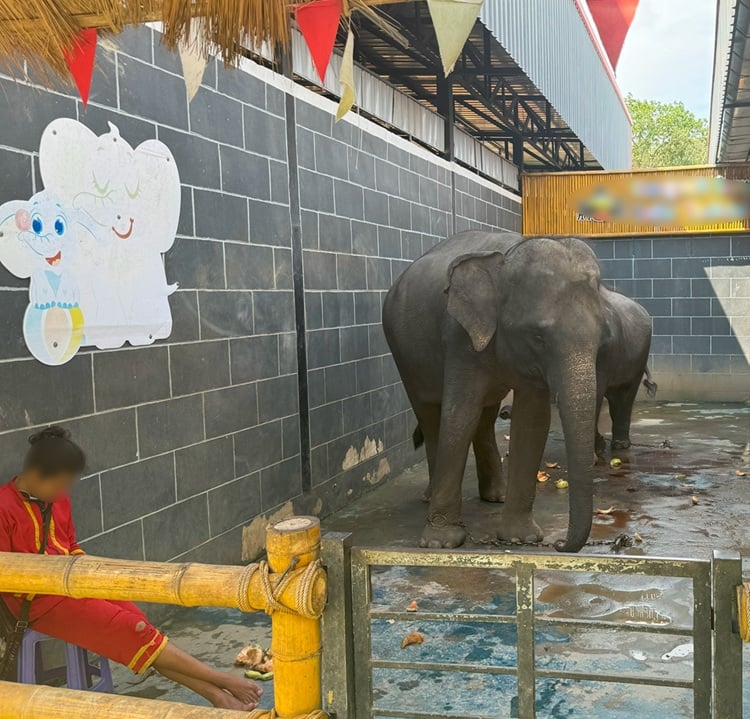
- 64% spend their days on short chains.
- 74% cannot socialise naturally.
- Only 5% live in conditions that meet even the “best possible” captive conditions.
With your support, we are keeping the pressure on travel companies to implement strong policies to protect wild animals and to stop promoting or selling tickets to hands-on wildlife encounters.
Together, we can give every elephant a life worth living.
FAQs
Is elephant washing ethical?
No. Washing requires elephants to undergo harsh training to make them submissive and safe around tourists. Elephants are often restrained, deprived of natural behaviours and kept in poor conditions.
What makes a venue elephant‑friendly?
Elephant‑friendly venues prioritise observation over interaction. Elephants are free to behave naturally, are not forced into activities and live in enriched, semi‑natural environments.
Is it safe to touch elephants?
No. Elephants are wild animals with wild instincts. Close contact increases the risk of serious injury.
How is World Animal Protection helping elephants in Thailand?
World Animal Protection works to support the locally-led transition of elephant venues toward higher-welfare models, and has successfully supported venues such as Chang Chill and Following Giants to become observation-only. The organisation advocates for policies to ensure that no more elephants are born or forced into a life in captivity for commercial tourism.
How can travellers help?
See elephants from a safe distance in the wild or visit an observation‑only, elephant‑friendly venue that doesn’t allow direct encounters such as touching, feeding, riding or washing elephants.
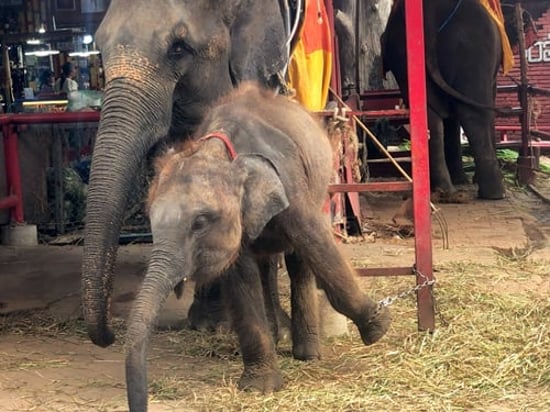
Bred to Entertain report
Read our 2026 assessment capturing 15 years of Thailand’s elephant tourism industry to find out more.
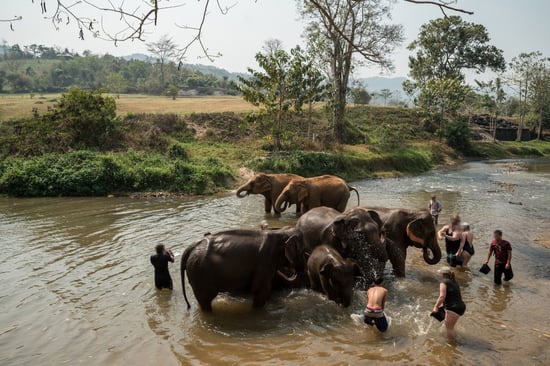
Is elephant bathing ethical?
Find out more about why elephant bathing is just as cruel as riding.
Donate to protect elephants
Will you donate to protect elephants from the clutches of tourism?